
Why Most Health Apps Make You Feel More Anxious, Not Less
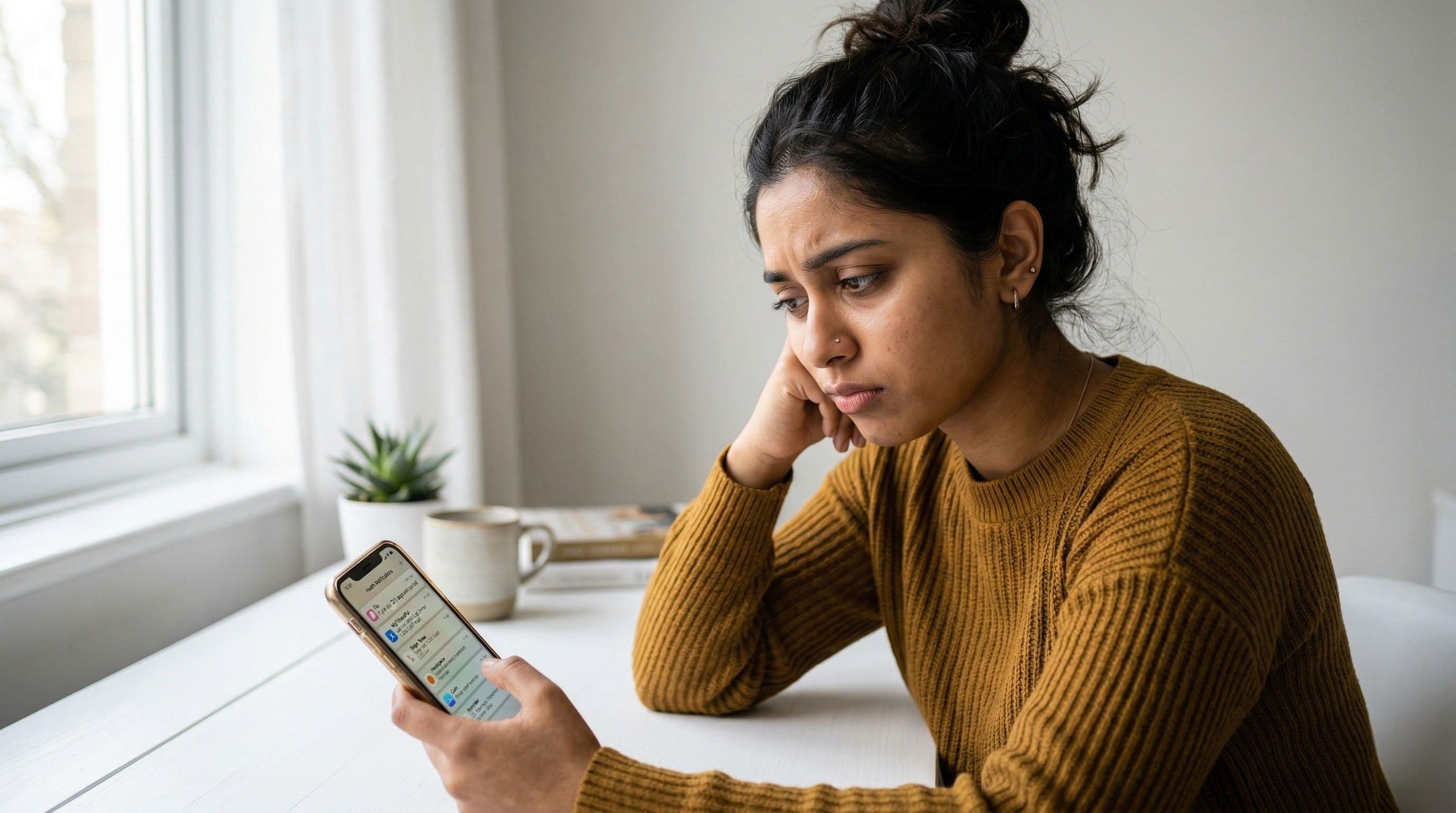
You downloaded it to feel better about your health. Instead you are obsessing over numbers, feeling guilty about gaps, and stressing over streaks. That is not health. That is a trap.
It was supposed to help
You downloaded the app because you wanted to take control. Feel better. Understand your body. Maybe lose some weight, or manage your PCOS, or just finally get on top of things.
For the first week, it felt great. Productive. Like you were doing something.
Then slowly, quietly, something shifted.
You started checking numbers constantly. Calories, steps, macros, streaks. You felt guilty when the number was wrong. Anxious when you missed a day. Stressed about meals before you even ate them.
The app that was supposed to make you healthier was actually making you worse.
The guilt machine
Most health apps are built around one core idea: accountability through tracking.
The theory is simple. If you see the data, you will make better choices. If you maintain a streak, you will build a habit. If you miss a day, the broken streak will motivate you to come back.
In reality? It does the opposite.
The streak breaks and you feel like a failure. The calorie count goes over and you feel ashamed. The step goal is not met and you feel lazy. Every single metric becomes a way to judge yourself.
You did not need a health app. You needed a health relationship. What you got instead was a scorecard.
When tracking becomes obsession
There is a name for this that nobody in the health app industry likes to talk about. It is called orthorexia, an unhealthy obsession with healthy eating. And its close cousin: compulsive self-tracking.
When you cannot eat a meal without logging it first. When you feel anxious if your phone dies and you lose your step count. When you eat less not because you are full, but because the number says you should stop.
That is not health. That is control disguised as wellness.
And the apps that encourage this behavior? They are not incentivized to fix it. Because engaged users mean better metrics. Even if that engagement comes from anxiety.
The comparison trap
Then there are the community features. The leaderboards. The "see how others are doing" feeds.
Someone walked 15,000 steps. Someone else ate a perfect 1,400 calories. Someone hit a 60-day streak.
And you, sitting there with your 3,000 steps and your rajma chawal that you could not even find in the database, feel like you are falling behind in a race you never signed up for.
Health is not a competition. But every app is designed like one.
What health actually feels like
Real health does not feel like anxiety. It feels like ease.
It feels like eating without doing math first. Moving because it feels good, not because a ring needs to close. Resting when your body asks, without guilt.
It feels like knowing yourself well enough to say: "Today was a low day, and that is okay."
No app can give you that by showing you a dashboard of numbers. You need something that understands context. That knows a bad day is not a failure. That does not punish gaps, but fills them with kindness.
A different way to pay attention
Swayu does not give you streaks. Does not show you leaderboards. Does not count your steps or gamify your meals.
It just pays attention. To how you talk about your day. To what you ate and how it made you feel. To the patterns that emerge over weeks and months.
And when it has something useful to say, it says it gently. Not as a correction. As a conversation.
"You mentioned being tired a lot this week. I noticed you have had almost no protein in the last few days. Maybe try adding some dahi or dal tomorrow?"
No score. No streak. No guilt. Just someone paying attention.
That is what your health deserves. Not another scoreboard. A companion.