Why Women in India Are Done With Generic Health Advice
Eat quinoa. Try intermittent fasting. Have a smoothie bowl. Cool. Now tell me what to do when my dadi says skipping lunch is bad luck and my PCOS doctor says eat every 3 hours.
The advice was never built for you
Open any health app. Read any fitness blog. Watch any wellness influencer.
The advice sounds great: eat clean, track your macros, prep your meals, try this superfood.
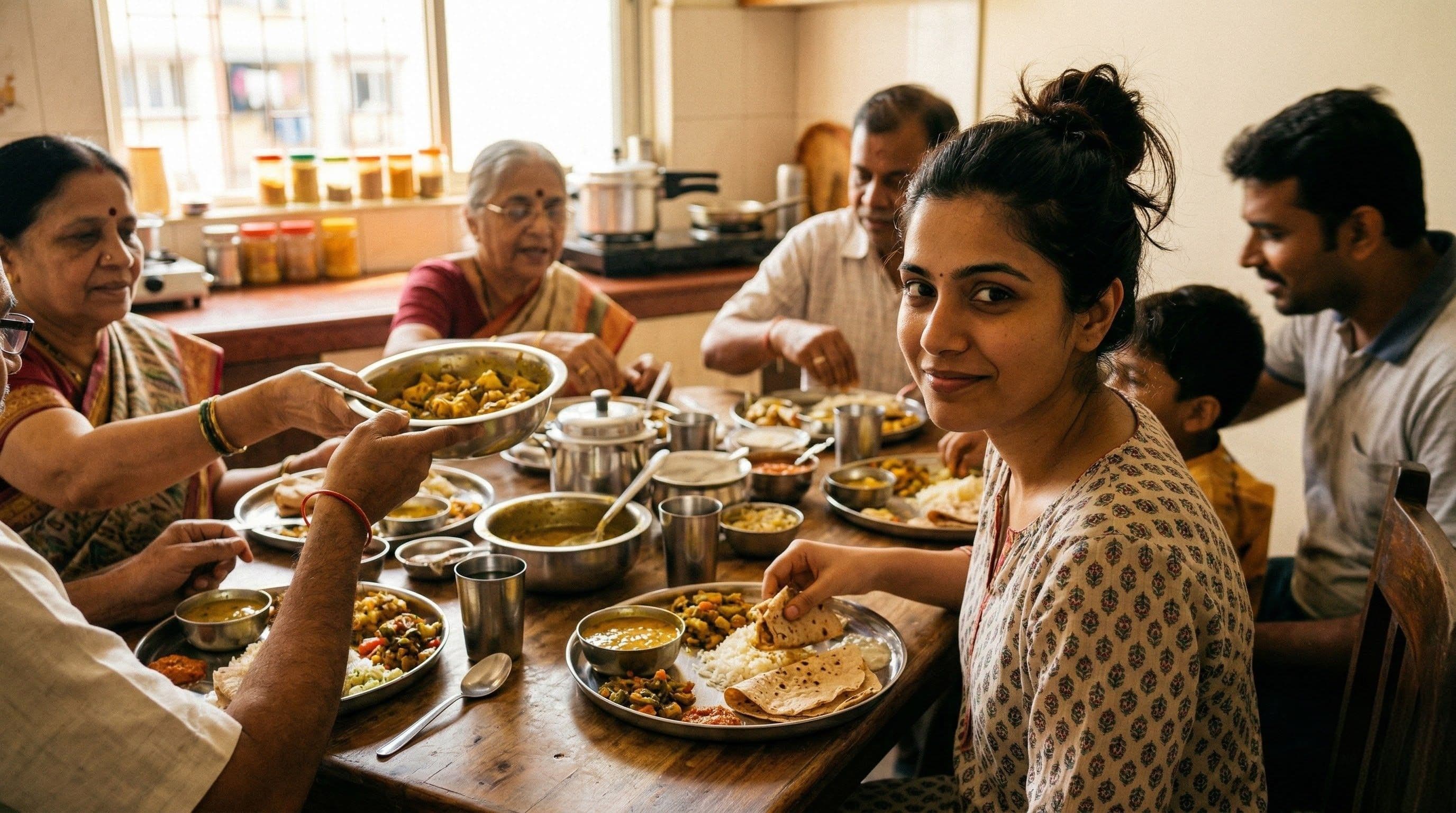
Now try following that advice when you live in a joint family. When your meals are decided by whoever cooked that day. When lunch is whatever sabzi was made for everyone. When saying "I will have my own food" starts a family discussion.
The advice was written for someone with a different life. A different kitchen. A different culture. And when it does not work for you, it feels like your fault.
It is not your fault. The advice just never considered your reality.
The food culture disconnect
In India, food is not just fuel. It is love. It is connection. It is culture.
When your mom makes ghee-loaded parathas on a Sunday morning, she is not trying to sabotage your diet. She is showing love in the most powerful way she knows.
When your nani insists you eat rice because "it gives strength," she is passing down wisdom that worked for her whole life.
When your colleague orders samosas for the team and you say no, it is not just a food decision. It is a social one.
No health app in the world understands these layers. They see calories. You see relationships.
Health advice that ignores your culture is not advice. It is a fantasy.
The PCOS paradox
Millions of women in India have PCOS. And the advice they get is a masterclass in contradiction.
Doctor says: avoid carbs. Mom says: you need roti to survive. Instagram says: try keto. Ayurveda says: eat warm, cooked food. Nutritionist says: count macros. Best friend says: just relax, stress makes it worse.
You are standing in the middle of all this advice, trying to figure out what actually applies to your body, your kitchen, and your life. And nobody is helping you sort through it.
Because every source of advice assumes it is the only one. None of them account for the fact that you are juggling five different frameworks at once.
What Indian women actually need
Not a Western diet plan translated into Hindi. Not a calorie counter that does not know what poha is. Not an app that says "log your meal" and shows you a grilled chicken breast.
What you need is something that understands that your food is seasonal, communal, and deeply personal. That your thali changes every day. That your health is affected by your cycle, your stress, your sleep, your family dynamics, your commute, and a hundred other things a Silicon Valley app has never thought about.
Something that gets that you cannot always control what you eat, but you can understand how it affects you.
The language problem
Here is something that sounds small but is actually huge: most health apps do not understand how you describe your food.
"I had dal chawal with aloo fry" should be one of the simplest things to log. But in most apps, you are searching for "lentil soup," guessing the calories, and spending more time logging than eating.
When you say "I had two rotis and sabzi," you should not have to specify which sabzi, weigh it in grams, and calculate the oil your mom used. That is absurd.
You should be able to say what you ate the way you would tell a friend. In your language. In your way. And have something actually understand it.
Built for your life, not someone else's
Swayu was built by people who grew up on this food. Who understand that health in India is not about perfection. It is about navigating real life, real families, real kitchens, and real bodies.
It does not judge your ghee. It does not ask you to weigh your dal. It does not assume you have a Whole Foods around the corner.
It listens. It learns. And it works with your life, not against it.
Because the best health advice is not the most scientific one. It is the one you can actually follow.